The lab, 05
The Logbook
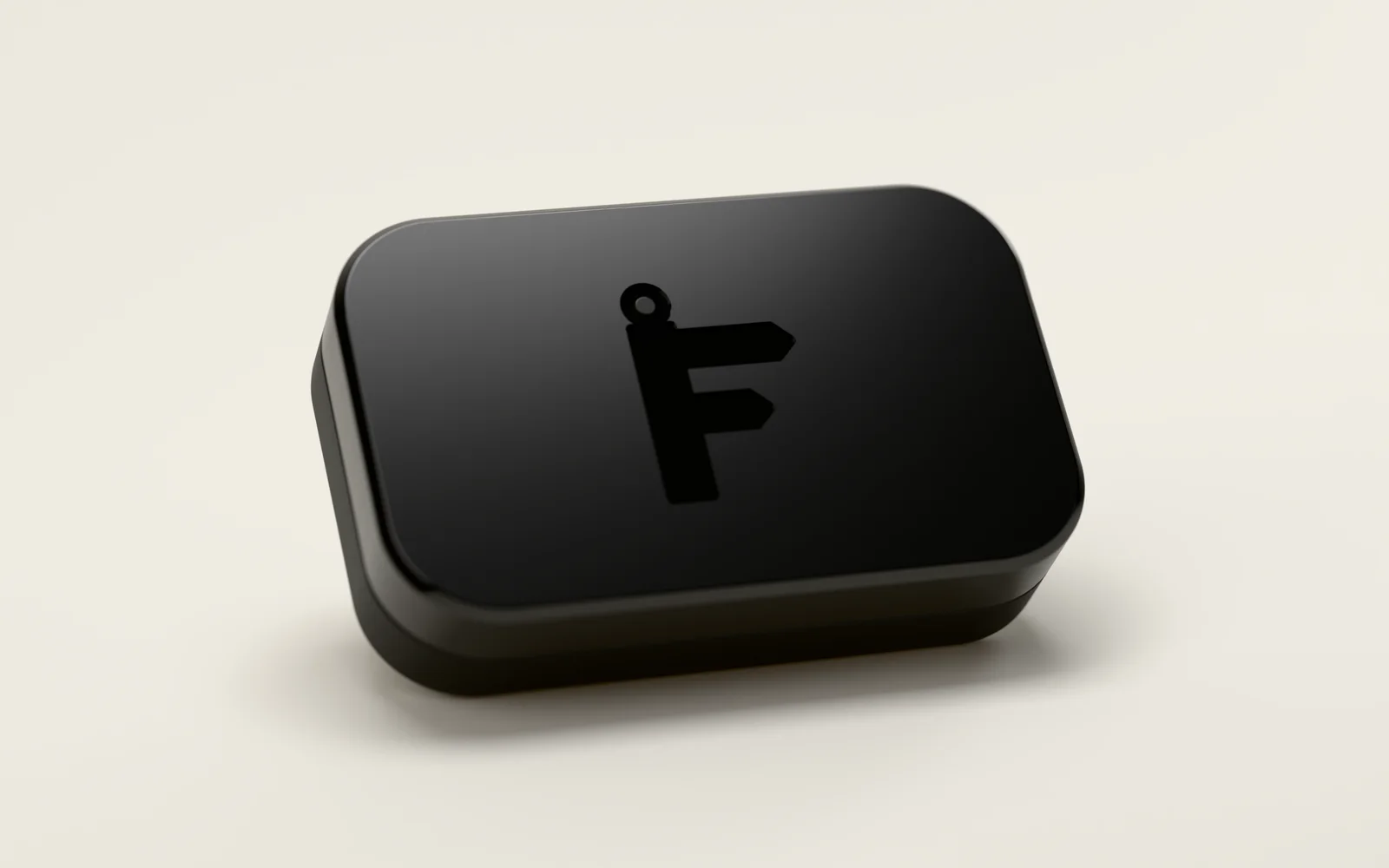
The Logbook is an idea further down Find a Drive's road: a small device that plugs into a car and keeps its diary, recording every drive. Nothing's been made. So we built it in Blender, the 3D modelling program, part by part, at the size Find a Drive's website draws it, and rendered it as if it had been.
- Made for
- Find a Drive, our app for finding and planning great drives
- When
- October 2026
- Made with
- Blender and its Cycles renderer, three.js for the model here, and a little arithmetic on light
Take it apart
This is the Logbook as we modelled it, every part in place. Drag it to turn it, slide it apart along its construction lines, and choose its lid and its light. Its one light is the ring on top of the F, Find a Drive's mark, and it lights in the colour you chose for your Find a Drive card.
- Lid
- Zirconia ceramic, bead-blasted to a satin, with a polished edge: ceramic rather than metal, so the GPS can still see the sky through it.
- Light pipe
- A clear rod from a light on the board up into the ring on top of the F, the Logbook's one light.
- Board
- GPS with its own ceramic antenna, a motion sensor, Bluetooth, and a chip to listen to the car's own network.
- Base
- Glass-filled polycarbonate, with a fine matt finish. Four Torx screws hold it to the lid, with no glue, so it opens.
- Plug
- The standard diagnostic socket every car has had since the early 2000s, with five of its sixteen contacts fitted: power, two grounds, and the pair that carry the car's data.
Its light, in your colour
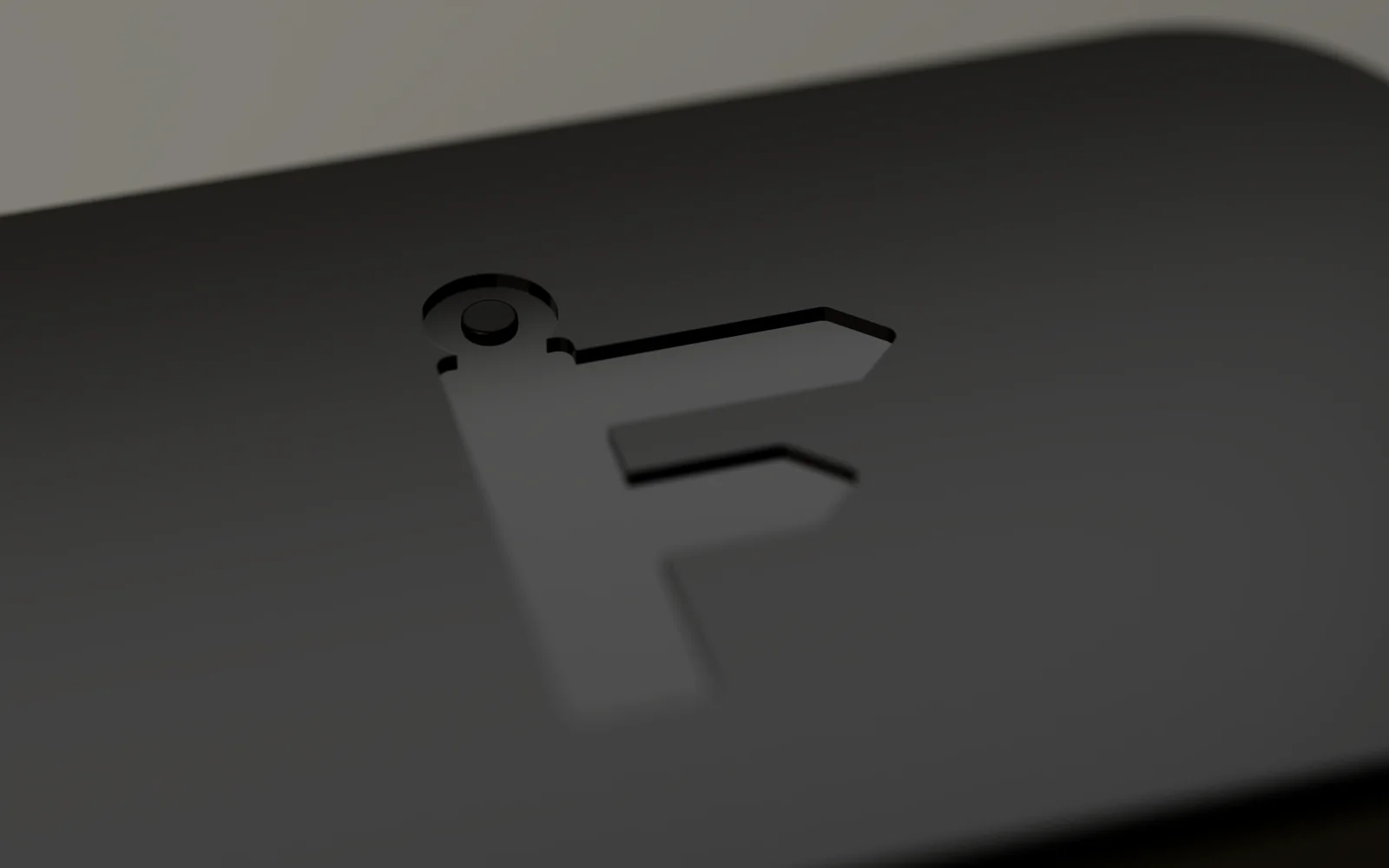
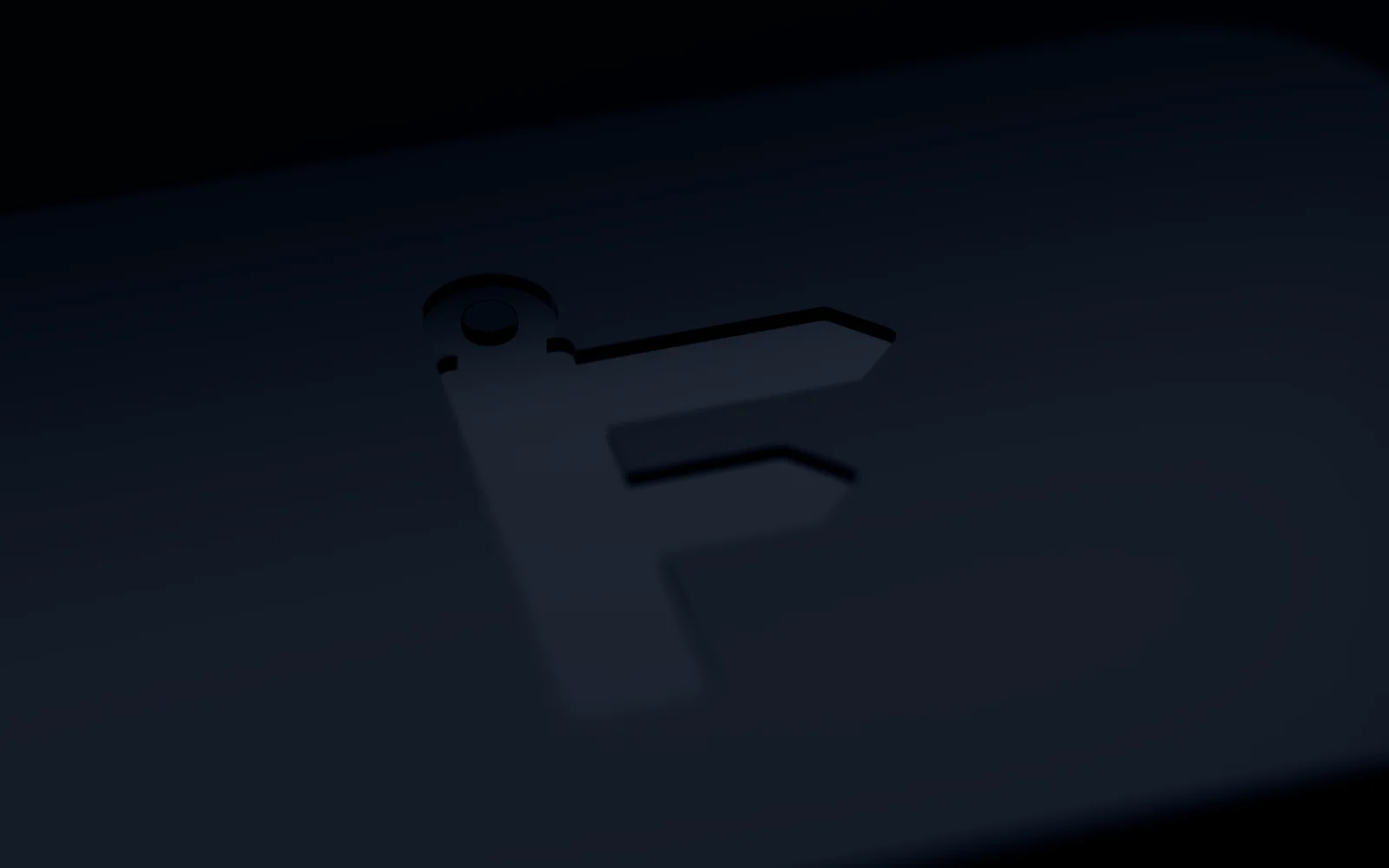
Each photograph was rendered twice: once with the light off, and once with nothing but the light, four stops darker, a sixteenth of the exposure, so its brightest part never turns to plain white. The second becomes a stencil, with a soft glow worked in. On the page, the stencil is filled with your colour and laid over the first picture by screen blending, which adds light the way light adds.
A paint is a surface colour, though, too dark to glow: racing green as a light would be nearly black. So each colour is brought up to full strength first, keeping its hue, and racing green glows green.
Specified like a product
- Size
- 64 by 40 millimetres and 17 deep, as Find a Drive's website draws it, its corners rounded to a radius of 10 millimetres.
- The lid
- Zirconia ceramic, bead-blasted to a satin with a polished edge: ceramic rather than metal, so the GPS can still see the sky through it.
- The F
- Pressed 0.3 millimetres into the lid, and polished bright against the satin round it.
- The light
- A clear rod carries light from the board up into the ring on top of the F, the Logbook's one light.
- The base
- Glass-filled polycarbonate, held by four Torx screws, with no glue, so it can be opened.
- The board
- 58 by 34 millimetres, with about fifty parts placed on it: a ceramic antenna for the GPS, Bluetooth, a motion sensor, and a chip to listen to the car's own network.
A prototype on paper
Modelling a thing that doesn't exist yet is a way of finding out whether it should. The model asked the questions a maker would: what the lid's made of if the GPS must see through it, how the light gets from the board to the ring, how it comes apart. It's a prototype on paper, not in a box: everything here is rendered, and nothing's been made.
More from the lab
Everything in the lab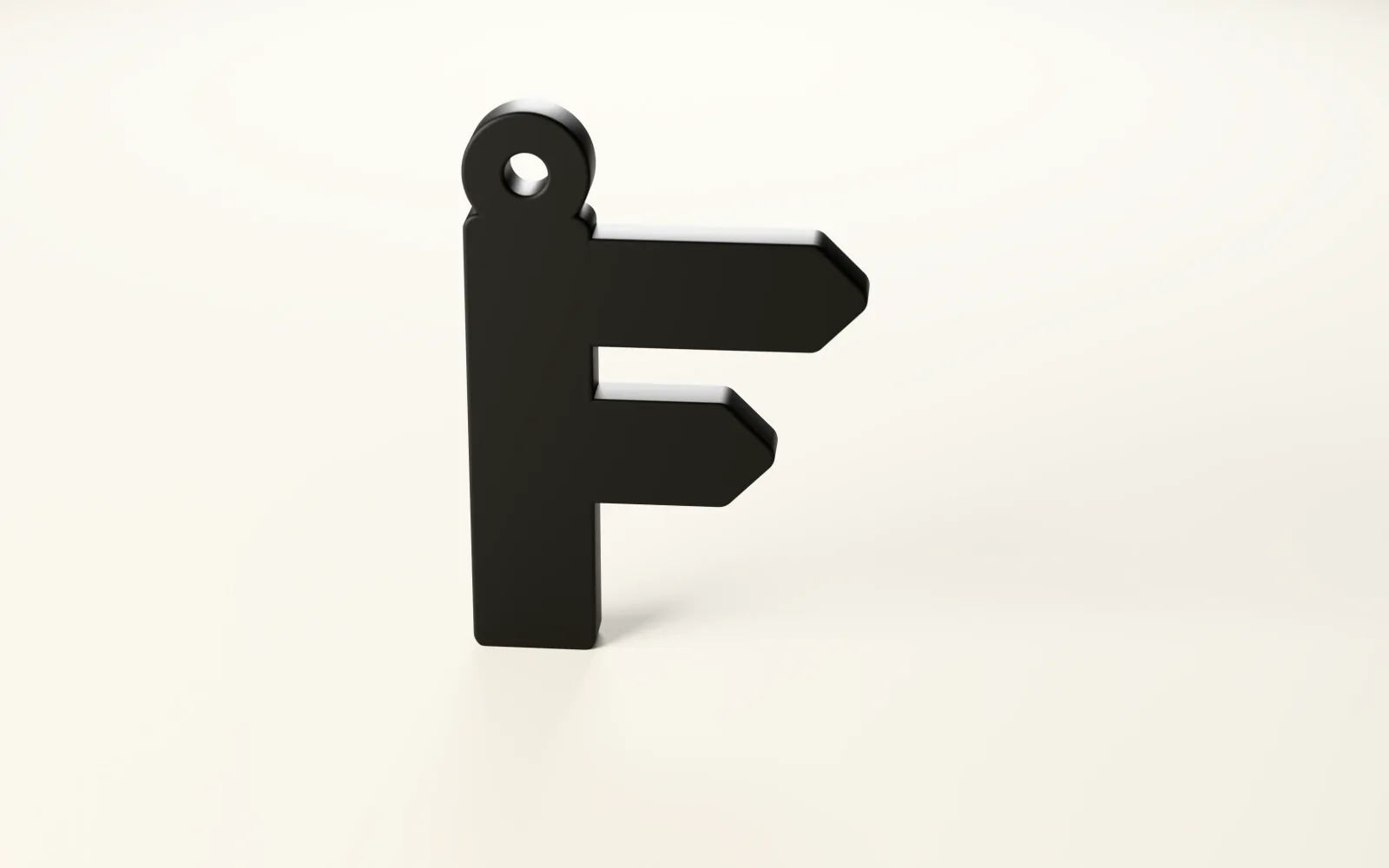
06, for Find a Drive
The fingerpost F
Find a Drive's mark, from folded maps to a road sign that's also an F, in four rounds and three days.
Read it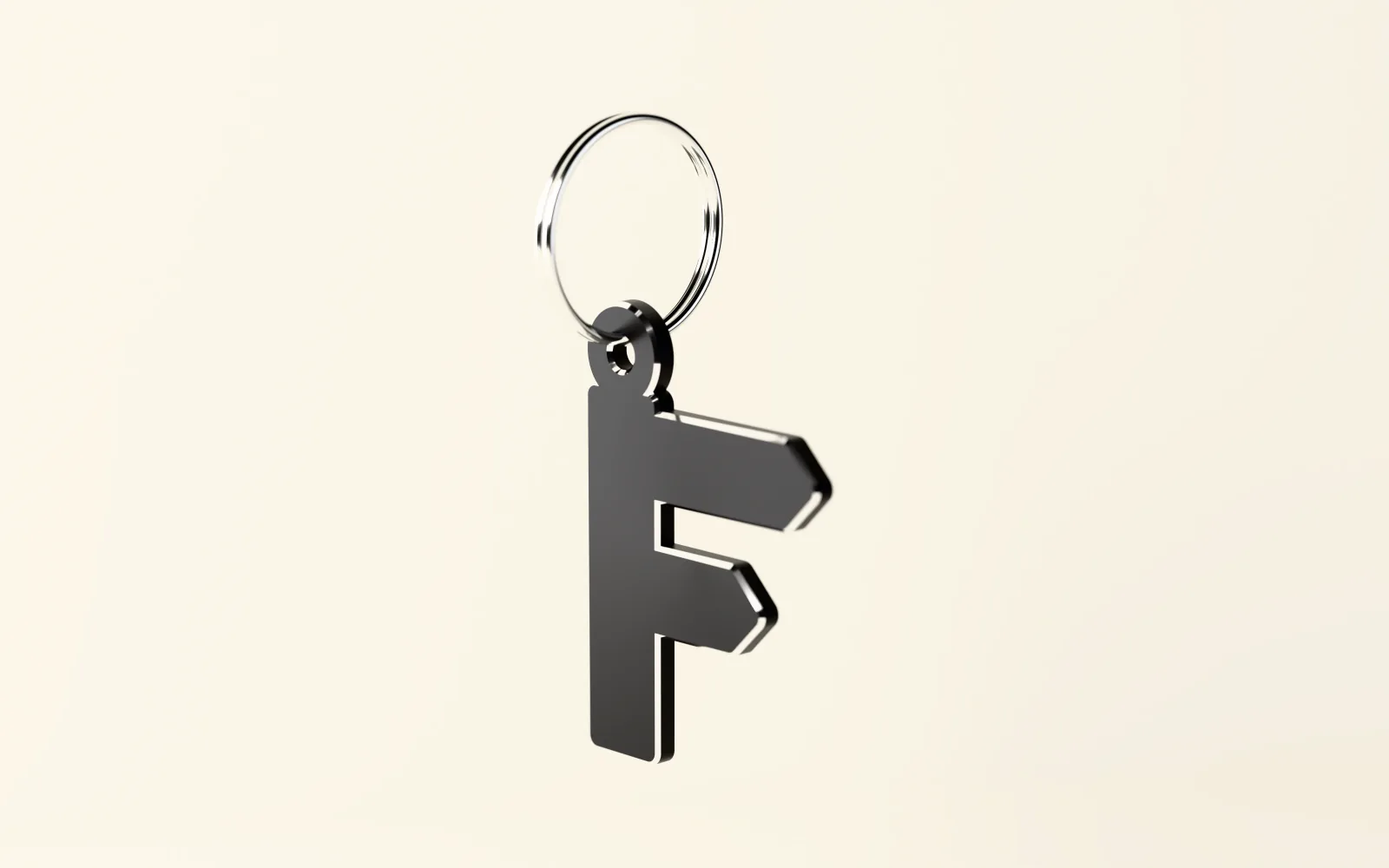
07, for Find a Drive
The keyring
Find a Drive's mark, the fingerpost F, as a 50mm keyring tag in black anodised aluminium with diamond-cut edges: a 3D render, made to see whether the mark works as a real object.
Read it


Contact
Talk through your project.
Tell us what you'd like to build, or what's getting in the way. A few lines is plenty to start with, and the first conversation is free.